








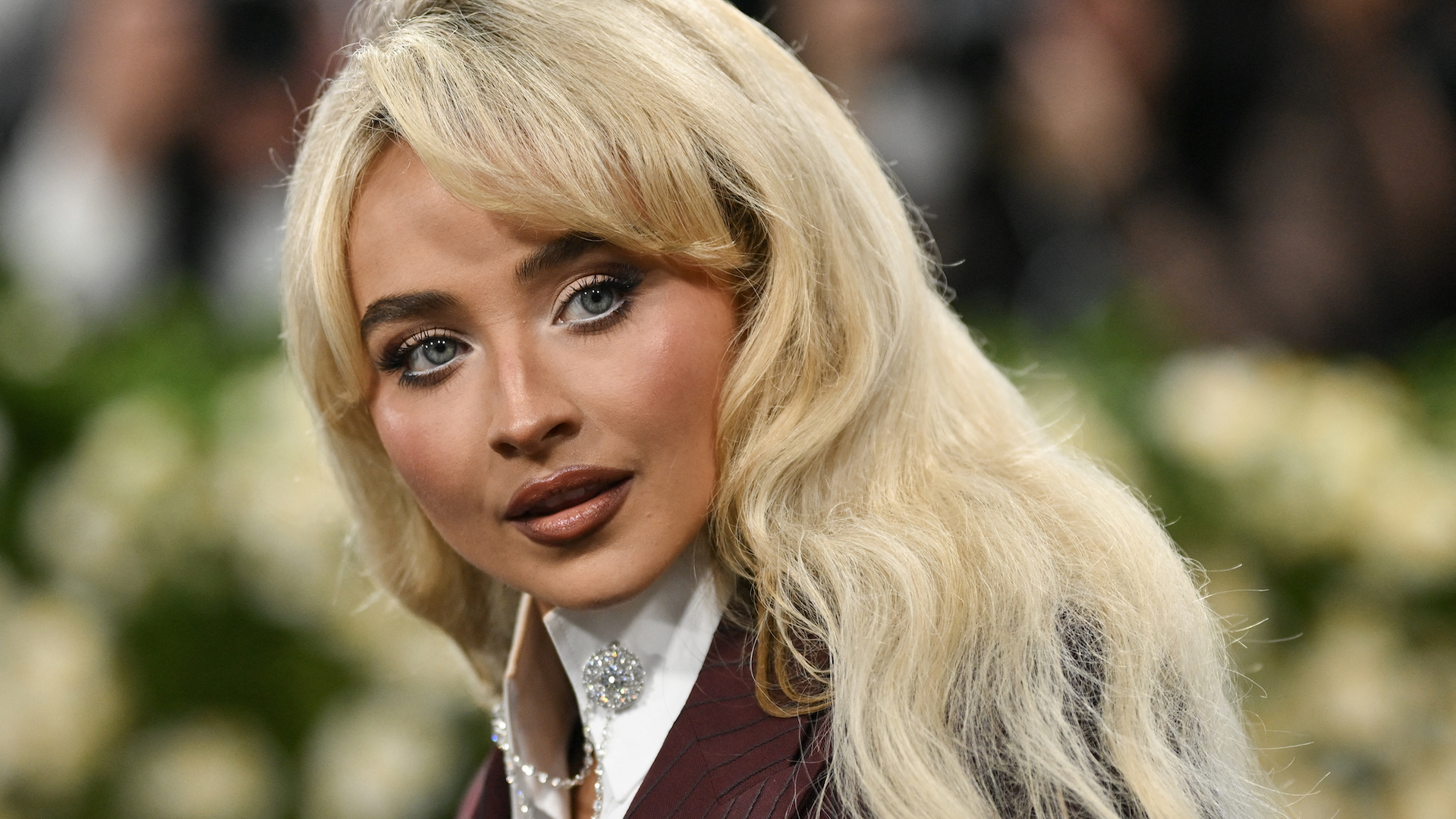
A long-running joke in my friend group is my obsession with Sabrina Carpenter’s hair. Don’t get me wrong — she’s got a lot going for her and sends my bi-panic straight into overdrive. But her hair? That’s on another level. There’s a reason we all want her cast in a live-action Tangled. I bring photos of her to the hairdresser every single time. I used her as inspo for the hair and makeup artist at my sister’s wedding. I study the exact angle and bounce of her bangs like I’m prepping for a final exam.
Spoiler alert: despite everyone’s best efforts, my hair does not look like Sabrina Carpenter’s. And honestly? I don’t think even her hair looks like her hair. My best friend finally sat me down after discovering the ridiculous amount I was spending on products that promised longer, healthier, bouncier, shinier locks and hit me with the dark truth: internet hair* is fake.
*For the record, I’m talking about Utah-blonde curls and influencer blowouts here, not the very different topic of Black women’s hair, which is definitely not my lane to speak on.
Is Everyone On The Internet Wearing A Wig?
For years, we bought the ruse. We thought the Kardashians were magically keeping bleached hair long and healthy. We thought Bachelorette leads were spending an hour a night massaging rosemary oil into their scalps. We thought we were the problem for not looking like a Victoria’s Secret model — yes, that reference probably aged me.
Sabrina Carpenter stuns with a bald cap for Interview Magazine. pic.twitter.com/Zb5EHBQFOm
— Pop Base (@PopBase) September 2, 2025
The penny dropped with our favorite Utah Mormon mommies. Maybe it’s because they started off more “ordinary” than Real Housewives or pop stars. Maybe it’s because they didn’t have Kardashian-level subtlety with their fake hair. Or maybe it’s because we were all hyper-scrutinizing them post–Swinger Scandal #neverforget. Either way, we finally realized: the people with the best hair on our feeds…aren’t working with just their own hair.
I asked Dean Banowetz, 8x Emmy-nominated Celebrity Hairstylist (AKA Hollywood Hair Guy), if extensions and wigs are more common than ever.
“The use of wigs and extensions has absolutely increased, especially in the last decade because technology and artistry have advanced,” Banowetz says. “What was once just used for film sets, stage performances, or red carpet transformations is now an everyday tool for celebrities, influencers, and regular people who want to change or elevate their look.”
Social media, of course, is the culprit — again.
“Looks change so quickly that using wigs and extensions is the fastest, healthiest way to achieve dramatic transformations without damaging natural hair,” Banowetz explains. “They’re a great way to play with a new look and just have fun.”
I’ll own my hypocrisy: I dyed my hair non-stop from age 15 to 25, going from bleached blonde to brunette to pink to auburn and back. And I can’t judge appearance tweaks like Botox or filler without acknowledging they’re rooted in lifelong societal pressures.
My issue is the secrecy. I’m not saying everyone needs to add a “#extensions” tag to their selfies, but it’s hard watching people feel bad about their hair when they’re comparing it to something that…literally doesn’t exist.
Nikki Goddard, certified hairstylist, makeup artist, and senior editor at The Right Hairstyles, says this illusion can be damaging.
“Artificial perfection is impossible to achieve naturally,” Nikki says. “When House of the Dragon premiered, two clients came in wanting ‘dragon blonde.’ They were shocked when I explained it would take multiple aggressive bleach sessions and cause severe breakage.”
Translation: if you want to be Rhaenyra for Halloween, grab a wig.
Is Haircare The New Skincare?
My Sabrina obsession has me deep in HairTok, and honestly? It’s chaos. Endless DIY hacks, product recs, stylist rants — it’s like QVC meets a black hole meets a girl in her bathroom whispering “this oil changed my life” into the camera at 2 a.m.
Haircare is the new skincare, and women are happily dropping hundreds. We’re not just splurging at salons anymore; we’re spending big at home, too. The Dyson Airwrap is $700 — to style hair. Seven. Hundred. Dollars. It’s absurd. And yet, somehow, everyone has one. I’m convinced they’re breeding in people’s closets.
And it’s not just the Airwrap — there’s the $80 “bond-repairing” shampoo, the $50 scalp massager shaped like a medieval torture device, the $40 hair perfume (because apparently your strands need their own scent profile). We’re doing hot oil masks, rice water rinses, silk pillowcases, and sleeping in elaborate overnight roller contraptions that make us look like we’re auditioning for a Bridgerton extras role.
I’m not even mad at the price tag. I’m mad we’re buying $700 tools, miracle serums, and liquid gold shampoos to chase hair that doesn’t actually exist. The emperor has no clothes, and his bangs are clip-ins. Meanwhile, we’re standing in the shower doing a three-step, twenty-minute scalp exfoliation routine to get one inch closer to something we still can’t achieve — because it was never real in the first place.
This isn’t about shaming — it’s about adjusting expectations. Your natural hair isn’t “worse” than influencer hair; it’s just not being boosted by extra hardware. This also helps you to achieve their hair, as you’ll know exactly how they got there, rather than being suckered into a 2-hour scalp cleansing procedure.
How to spot extensions:
“Almost all extensions, whether tape-in, keratin bonds, micro-links, sew-ins, or clip-ins, put an extra weight at a specific anchor point,” Nikki reveals. “So, when the person’s hair moves (because of the wind or head movements), their hair does not move evenly; instead, you will see that its centre of gravity is somewhere in the middle. The only exception is ultra-short extensions; these may not create an obvious hinge because the length difference is minimal.”
Banowetz adds: “Another giveaway is volume that doesn’t quite ‘collapse’ the way natural hair does. Extensions tend to keep their fullness at the ends, while real hair often tapers.”
How to spot a wig:
“Casually glance at the hairline near the temples or along the part when the person tilts their head,” Nikki explains. “Even with perfect blending, wigs and extensions sometimes create a slightly thicker or straighter ‘root line’ than natural hair. Baby hairs may look uniform or be too perfectly placed compared to the rest of the hair.”
Now go forth and love your locks — fake or not. Just know Sabrina’s bounce is probably sewn in.