
Belly’s Journey To Paris Is The Coming-Of-Age Trip Lauren Conrad Never Took

Paris has long lived in the American imagination as a place for reinvention, especially through love. The city has become a cultural shorthand for transformation in TV and pop culture. “This is, no doubt, true for Belly, who lives her life by the gospel of Audrey Hepburn films like Funny Face and Sabrina,” says The Summer I Turned Pretty fan and content creator Meghan Witthaus. When Isabel “Belly” Conklin journeys to Paris in TSITP’s third and final season, it symbolizes a deeper kind of coming-of-age. Paris isn’t just a pretty backdrop — it’s the moment Belly gives herself permission to let go of heartbreak and imagine who she could become outside of Cousins Beach.
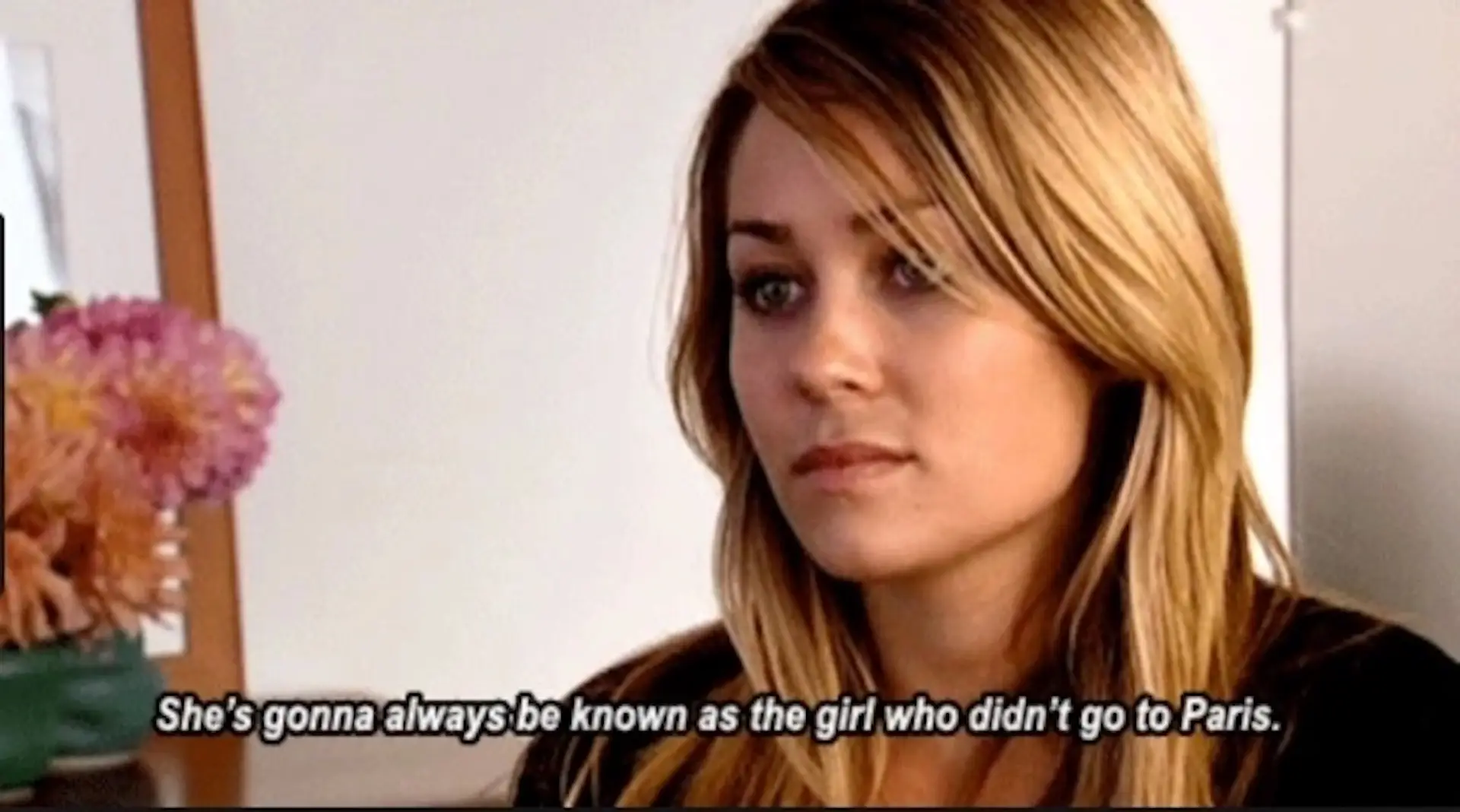
To Emily in Paris, the city represents escapism, reinvention, and spectacle. Belly’s Paris, by contrast, feels quieter and more authentic — less about fantasy, more about permission. And where The Hills cemented Lauren Conrad as “the girl who didn’t go to Paris,” Belly does go, reframing Paris as the rite of passage Lauren once turned down. Belly’s choice signals a generational shift: young women learning that sometimes saying yes to the unknown is the real love story.
Still, the trip begins uneasily. Her French has slipped away, and she stumbles through the language that once gave her pride. “It’s subtle, but it speaks volumes,” says Meredith Taylor (@merelymeredith), a content creator and super fan. “Her forgotten fluency mirrors the parts of herself she lost in her relationship with Jeremiah — her identity, her passions, even her confidence.” As Belly gradually regains her ease with the language, it becomes a metaphor for reclaiming herself.
Advert
For years, Belly’s grief and devotion to Jeremiah consumed her. “We’ve watched her lose herself to the point where Jere became her identity,” says creator Jessica (@faeryfolkk). In Paris, Belly finally has the distance to break old patterns. She cultivates friendships, considers her future, and learns that love doesn’t have to eclipse everything else. “While her romance with Benito is part of her self-discovery,” says Witthaus, “it’s perhaps most significant how secondary romance is in her life in Paris. Belly enjoys these connections, but they don’t define her. Instead, she’s grounded, independent, and focused on her career and purpose.”
This marks a sharp departure from the Belly viewers met at the start. “The Belly Conklin we’ve come to know often abandoned herself to let love take center stage,” Witthaus adds. “This new Belly — or Isabel to her Parisian friends — still loves deeply but is letting love be part of an ensemble that makes up a rich life.” Even small acts, like cutting her hair after once promising Jeremiah she never would, become symbols of shedding old identities. “She knows where she ends and where she begins,” says Jessica. “She belongs to herself and is ready to live. There’s nothing more romantic than a girl who’s come to know her heart.”
The symbolism of Paris, however, extends beyond Belly. “Travel doesn’t erase grief,” says Deborah Robbins, a TSITP fan and therapist. “What it does is create distance. It gives you space to consciously step away from triggers and stressors, and sometimes that pause is what allows healing to begin. Avoidance isn’t always bad — if it’s temporary, it can actually be healthy.”
Advert
Robbins connects Paris to its history as a muse for artists and dreamers. “Romantic love is a form of inspiration in the same way art is,” she says. “The dopamine and oxytocin hits of falling in love are similar to the thrill of discovery and creation. Paris offers an immersive sensory experience — through architecture, food, beauty — that lights up the same parts of the brain that feel intimacy, lust, and connection. Isn’t that the best antidote for sadness or grief? Love.”
And that’s why Belly’s Paris resonates so deeply. In Robbins’ view, watching a character reinvent herself abroad taps into a universal need for escape. “Fantasy and pretend are necessary breaks in our reality,” she says. “As adults, we still need play — a mental vacation. Watching Belly in Paris, or even remembering shows like The Hills, lets viewers imagine reinvention for themselves.” In a world that often feels frightening and overwhelming, that kind of fantasy offers connection, safety, and hope.
Topics: Friends, The Hills, Travel, TV
 Sara Radin